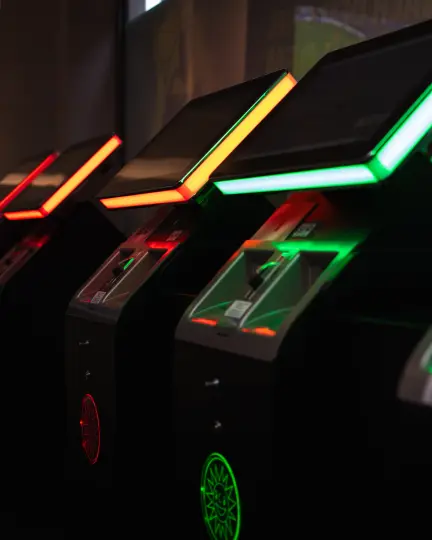
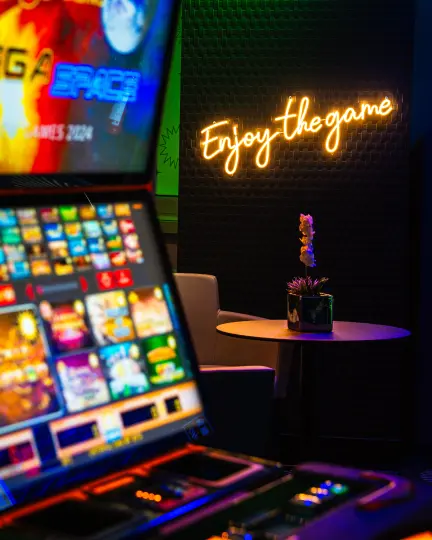
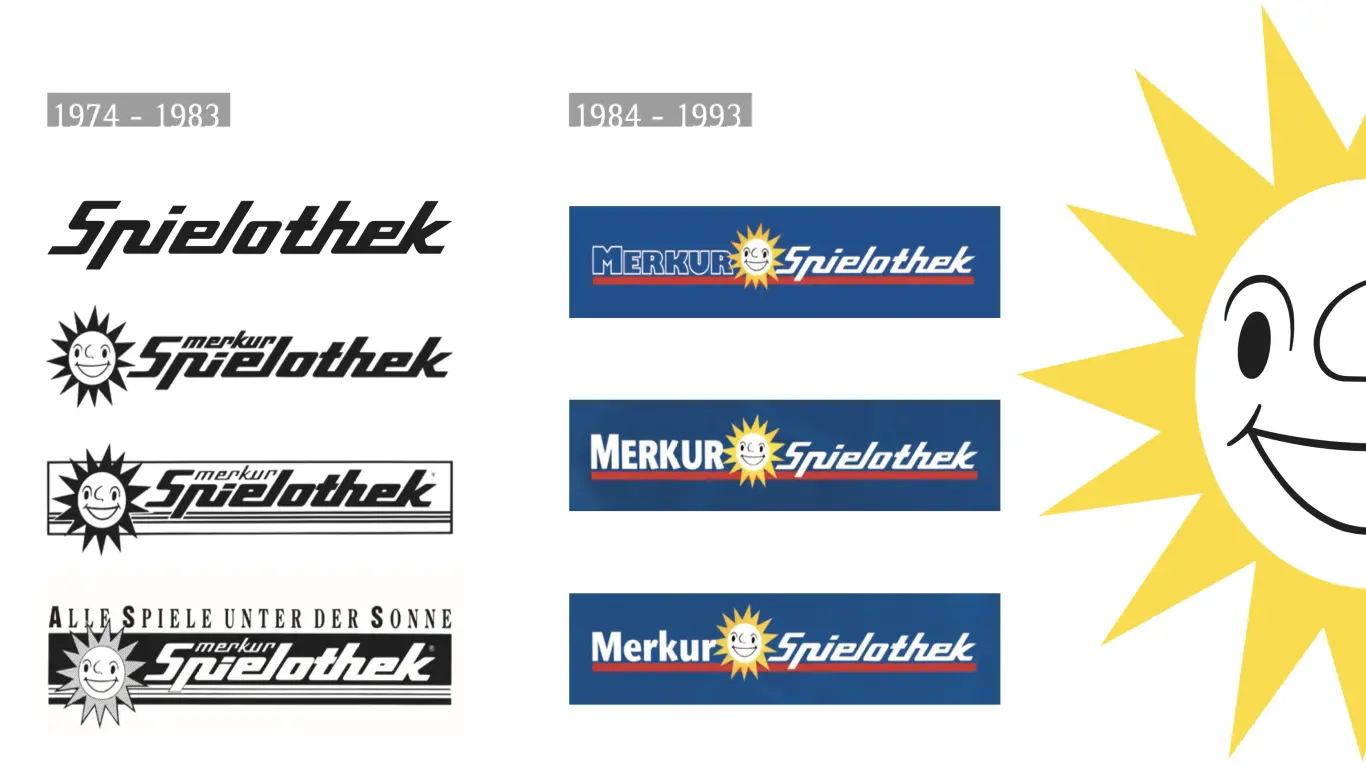
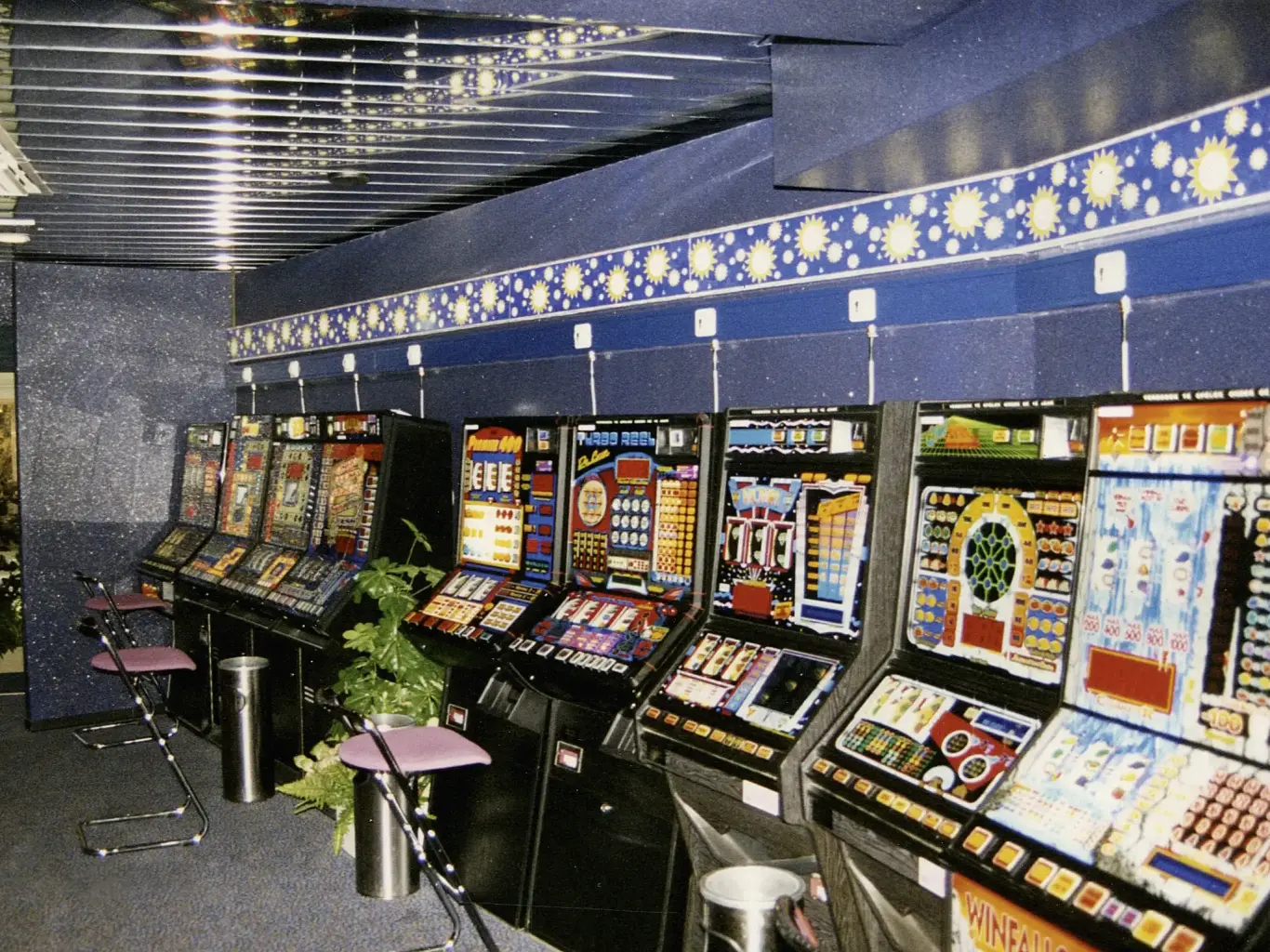
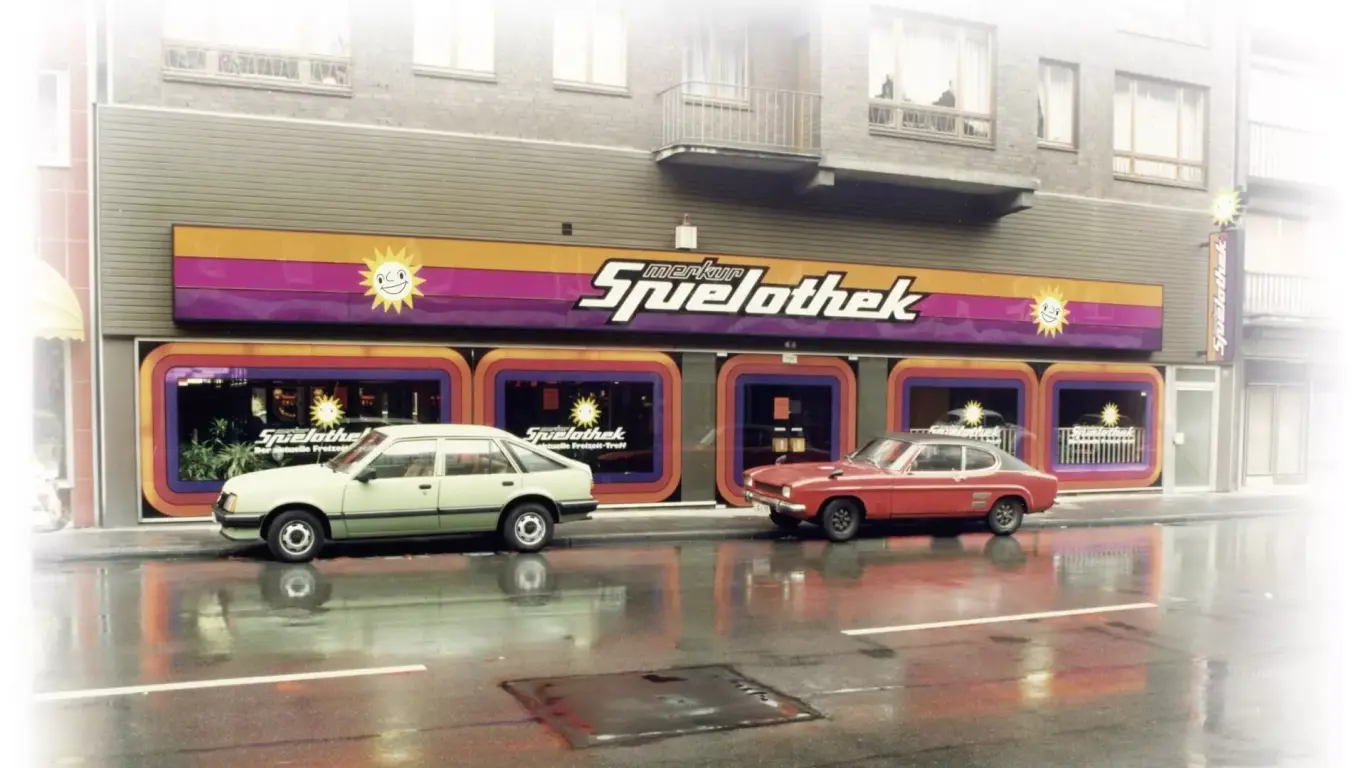
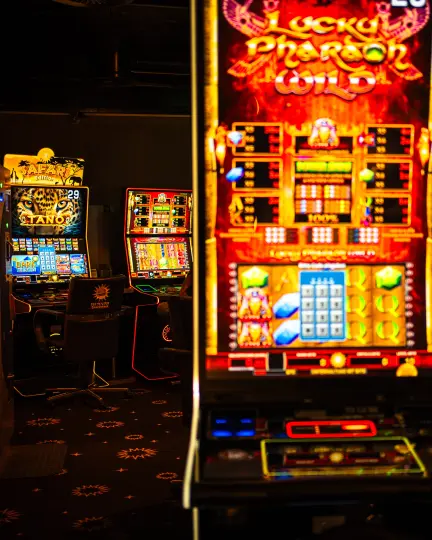
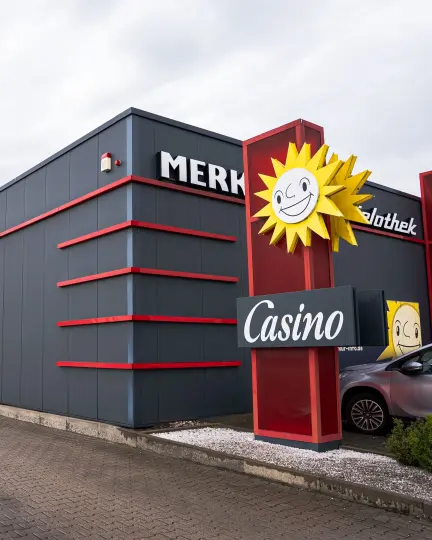
Inside the arcades, the aesthetic is defined by the lasting use of sisal wall decorations and suspended grid ceilings. On the outside, the brand is instantly recognizable by its signature MERKUR-SPIELOTHEK signage set against a bold blue backdrop.
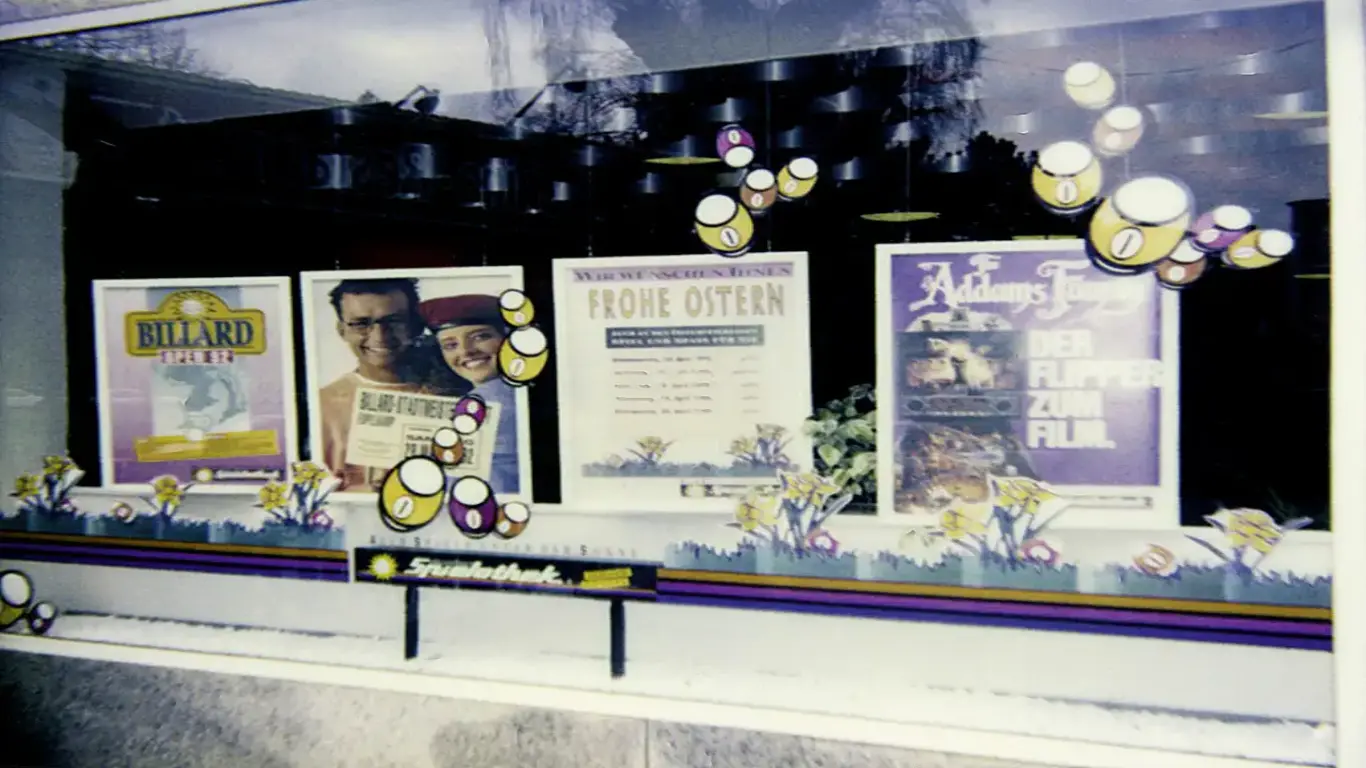
To keep the storefronts fresh, Paul Gauselmann introduced specialized poster frames with protective film covers. This design allows for quick and easy updates to marketing materials, providing a flexible foundation for point-of-sale (POS) promotions.
The trend-setting shift in corporate attire: purple became the first official color for mandatory workwear.
Starting in 1987, the company implemented a standardized training program for all new branch and deputy managers (FLV). The curriculum was split between theoretical administrative studies at a center in Trier and hands-on practical experience at the MERKUR-SPIELOTHEK in Kassel I.
In 1989, Michael Gauselmann introduced a new perk: company cars for branch managers. The initiative kicked off at a meeting in Espelkamp with the delivery of the first 25 Ford Fiestas, followed by 25 more every quarter until every manager had their own vehicle.
As the company entered its second decade, technicians moved away from tedious manual logs for malfunctions and complaints, upgrading instead to handheld digital devices for more efficient mobile data collection.
Toward the end of the 80s, the 'Strategy Circle' was formed. This collaborative group of up to 20 members—including everyone from on-site technicians and managers to executive directors—worked together to shape the company's future, eventually drafting the mission statement for CASINO MERKUR-SPIELOTHEK.
By 1992, the training and professional development of branch managers were centralized at the CASINO MERKUR-SPIELOTHEK training center, which was then based at Alter Markt in Lübbecke.
Gaming Machines 1984–1993
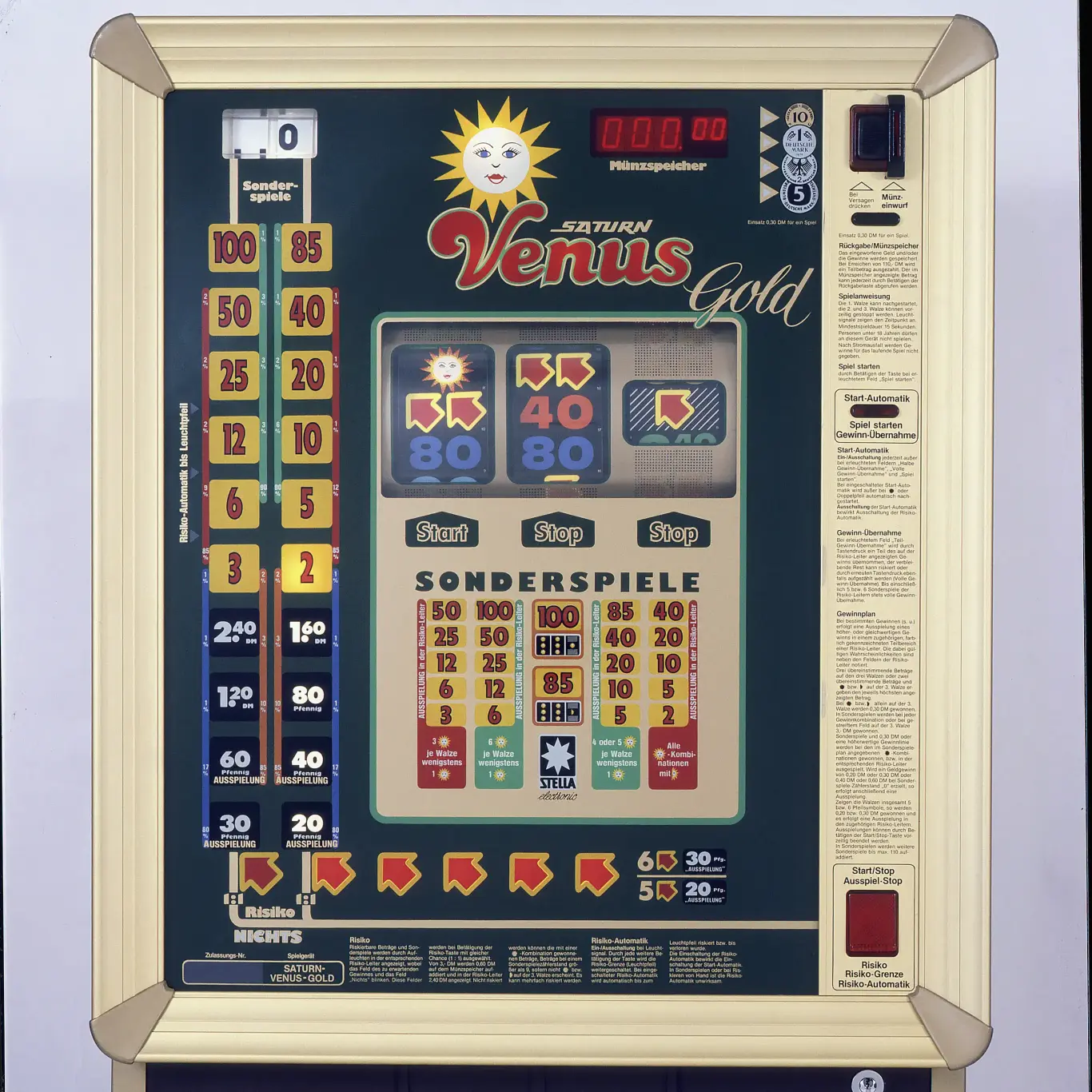
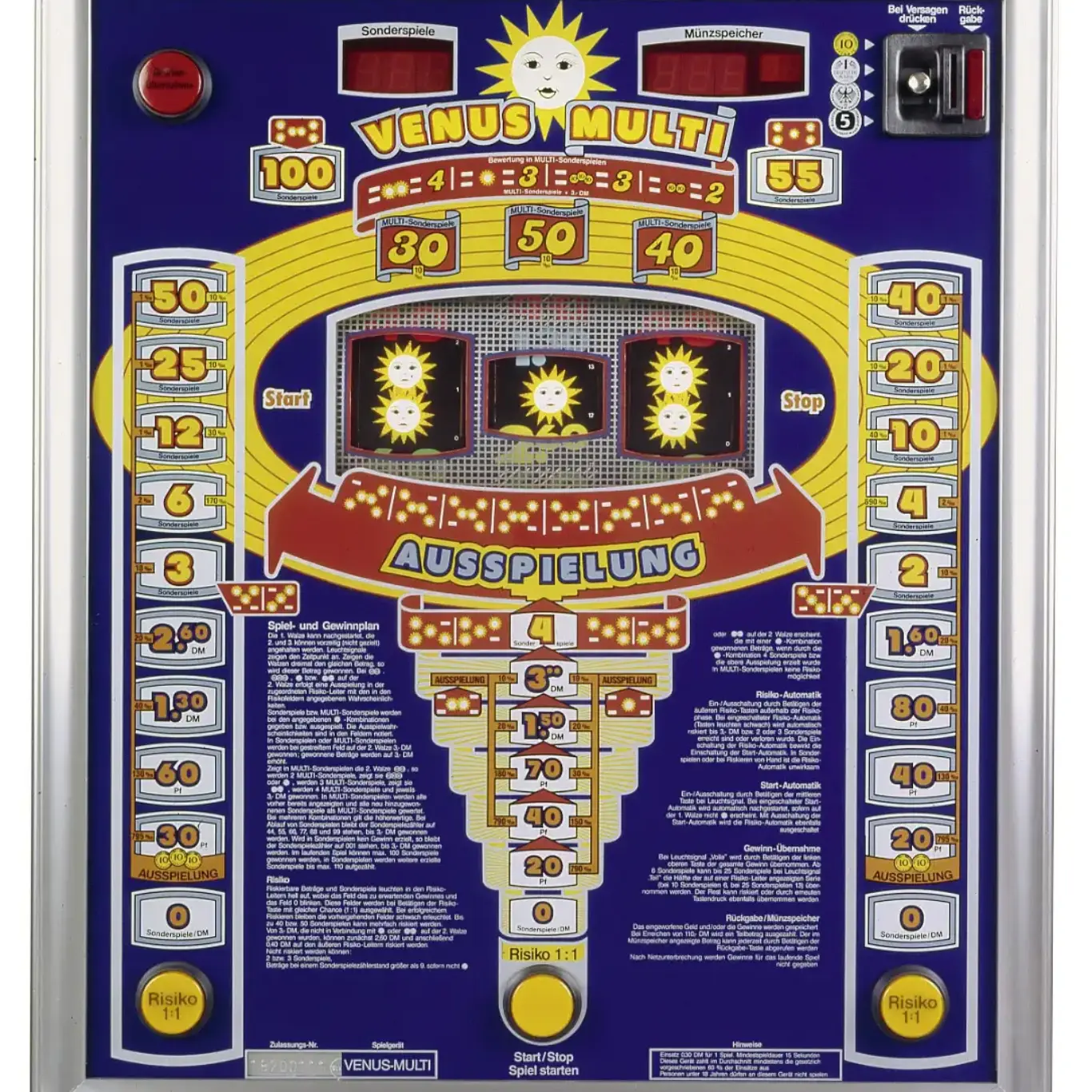
1984 saw the release of the “Saturn Venus Gold,” another breakthrough from the Gauselmann workshop, marking a strategic pivot toward a greater focus on money gaming machines.
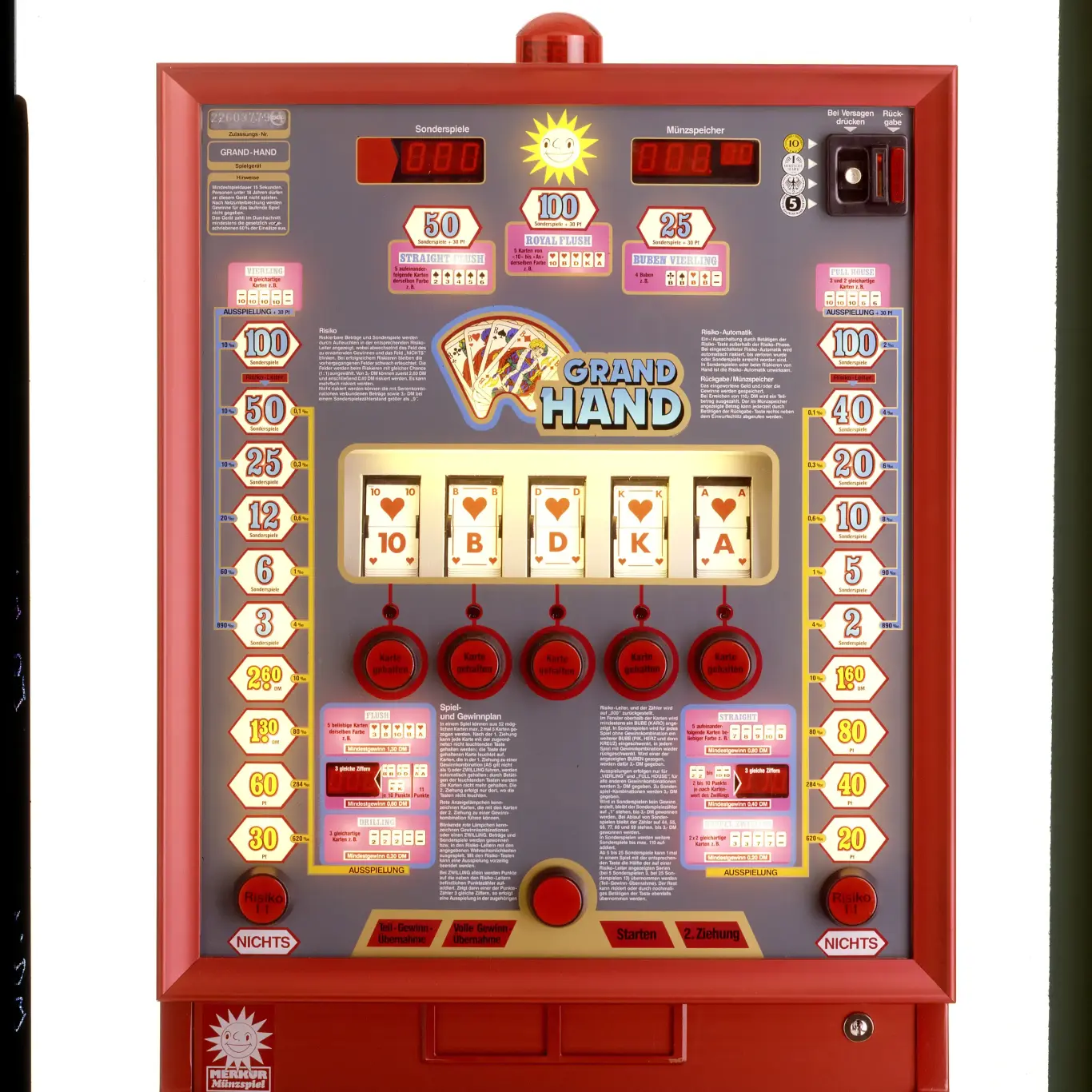
In 1986, Paul Gauselmann debuted a money gaming machine utilizing card-flip technology. The inspiration struck him at an airport while watching the mechanical flipping panels of a flight information board. This led to the creation of the “Grand Hand,” named after the popular Skat card game.
The 1988 release of “Multi Multi” introduced a first for money gaming: a double step on the risk ladder.
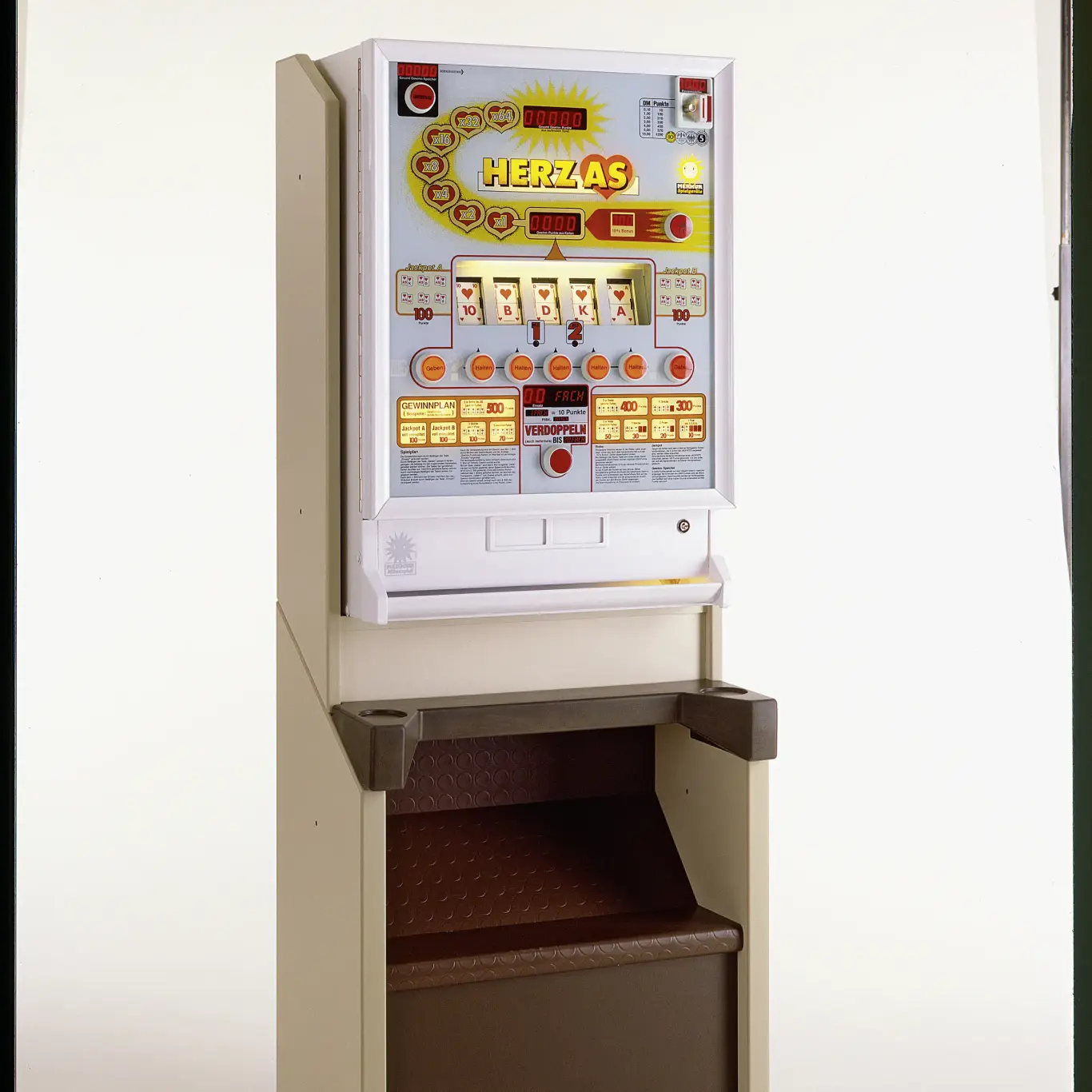
The mid-80s brought 'points machines' to the market. These allowed players to earn extra winning points, extending their playtime without needing to insert more coins. A standout hit from this era was “Merkur Full House,” which later evolved into “Merkur Herz As.”
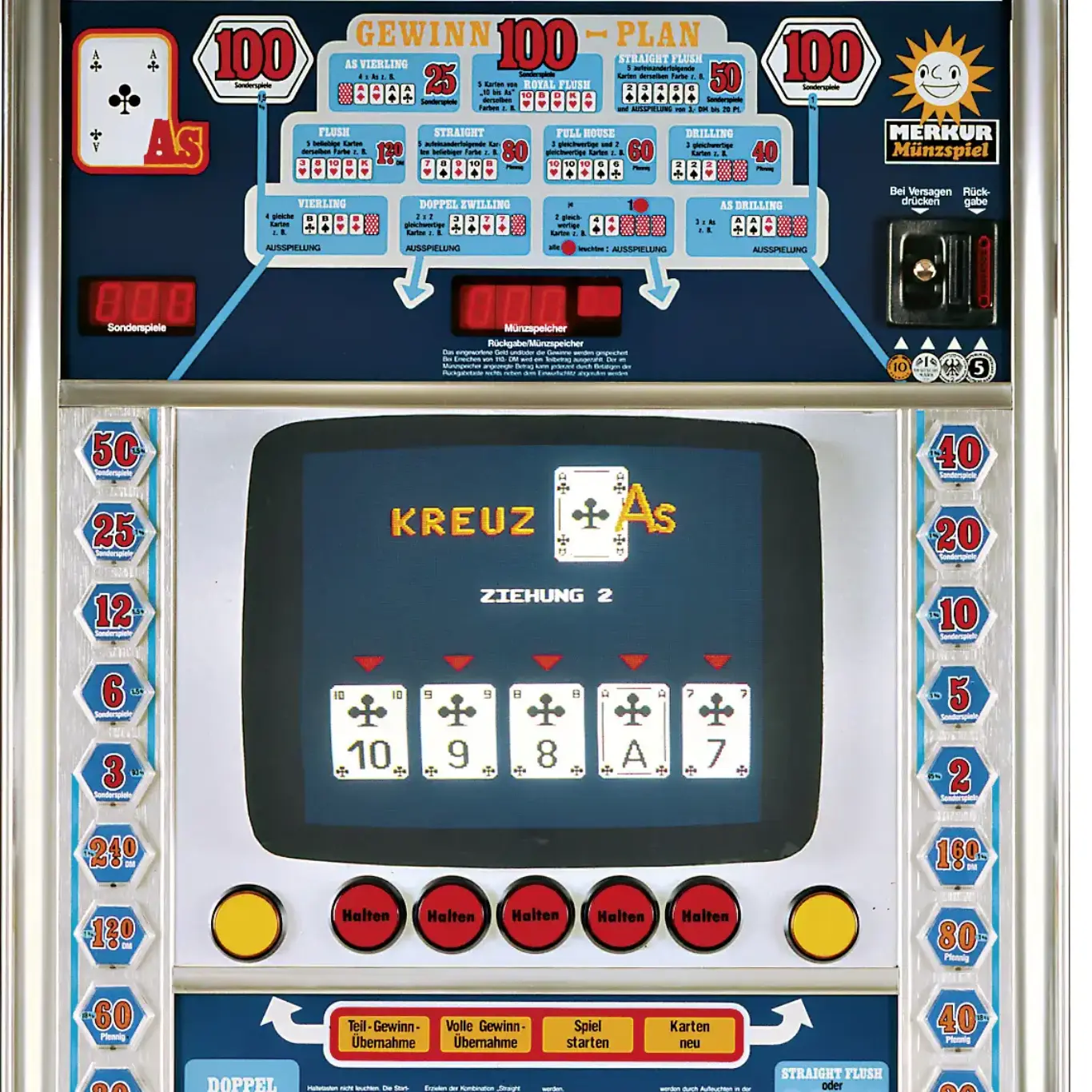
“Merkur Kreuz As” made history as the first money gaming machine to incorporate a digital screen.
The 1993 International Trade Fair for Amusement and Vending Machines (IMA) saw the debut of “Kimme + Korn,” a sports shooting game that quickly became a favorite in gaming venues.
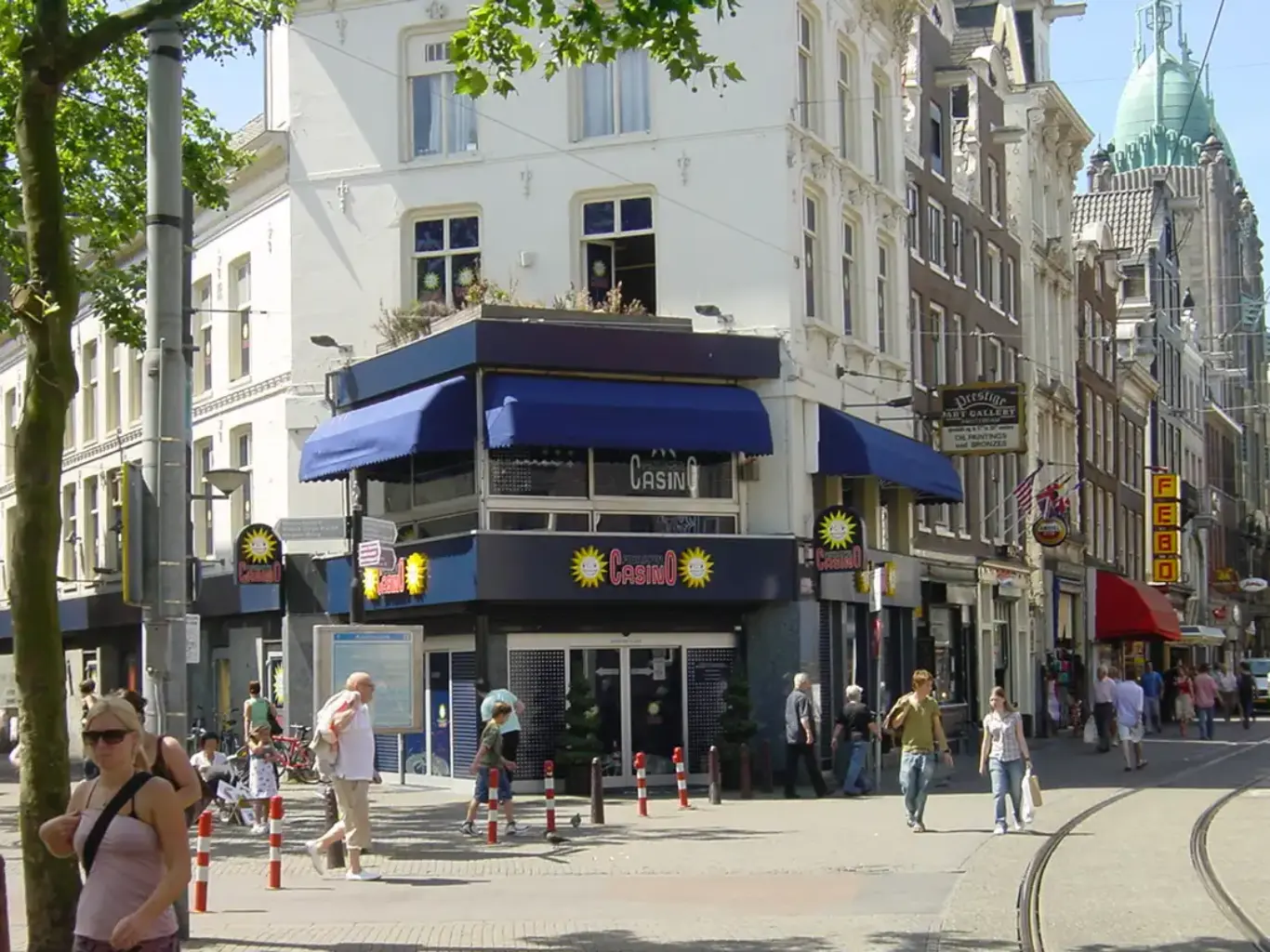
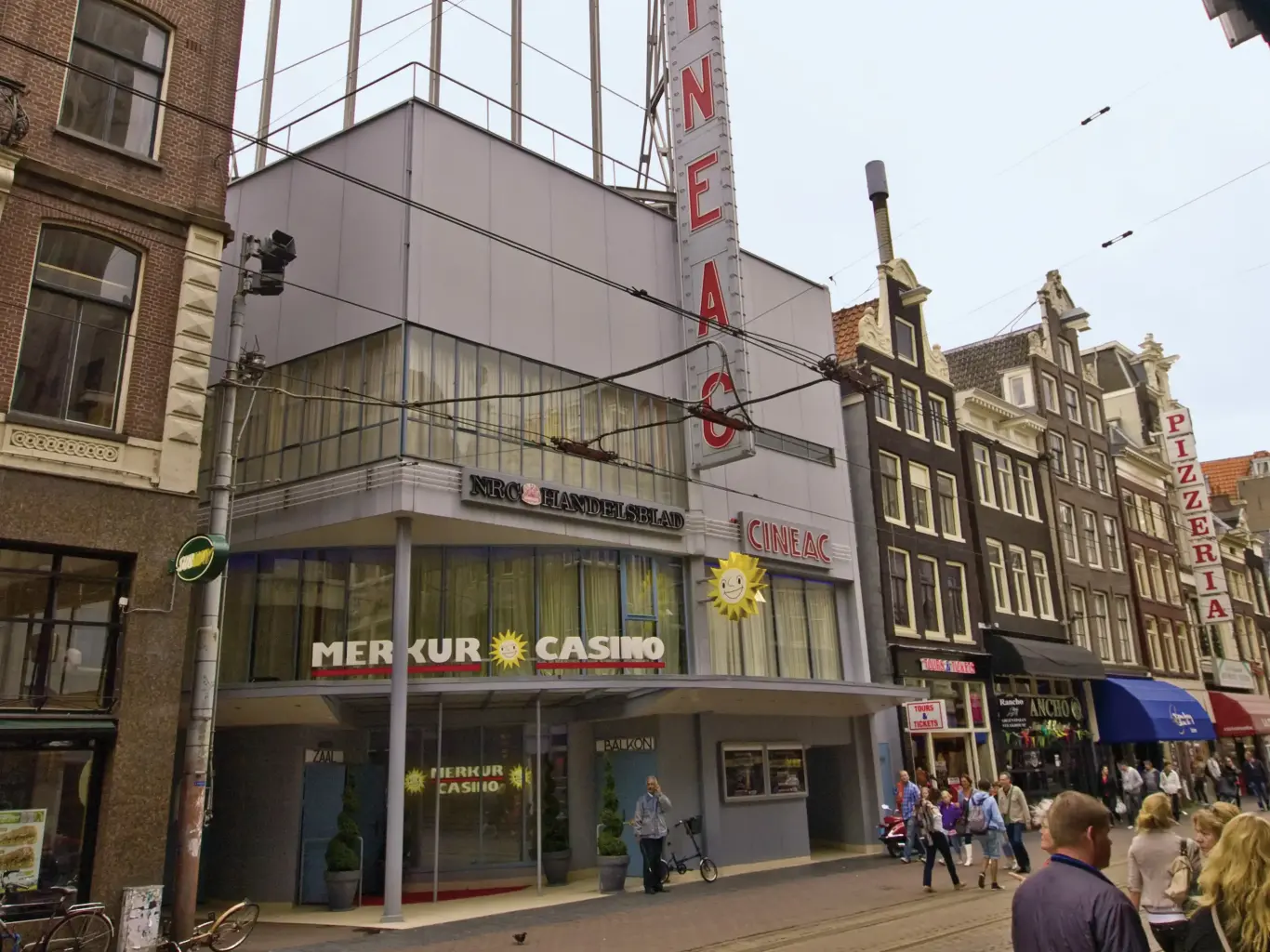
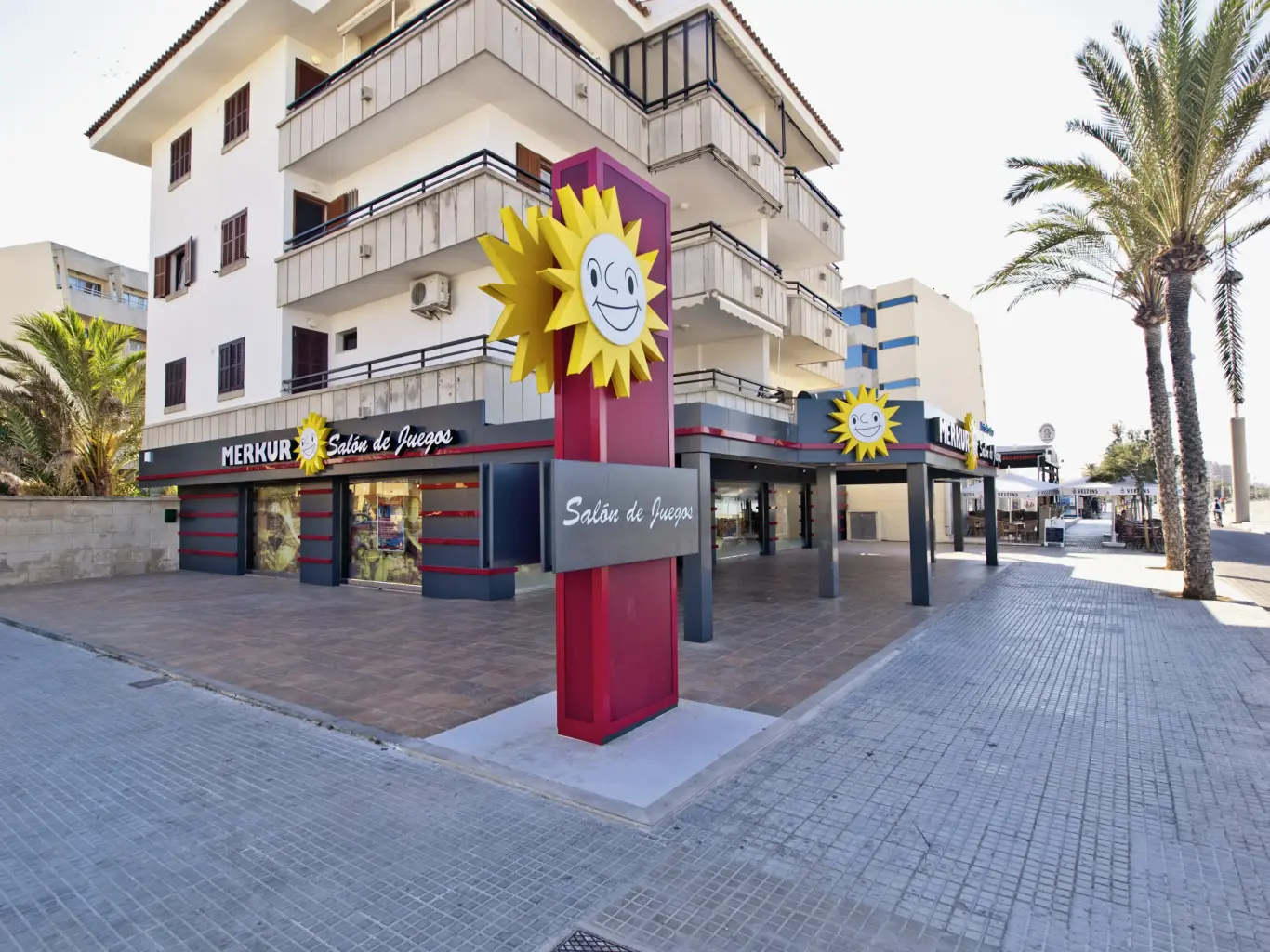
Expanding from Espelkamp to the global stage: MERKUR's international journey began in 1986 with the opening of the first entertainment center in Amsterdam. This paved the way for expansion across Europe, leading to the 2006 founding of MERKUR CASINO GmbH to streamline global growth.
In 1986, the MERKUR GROUP opens its first international entertainment centre in Amsterdam. This is followed by arcades in other European countries. In 2006, MERKUR CASINO GmbH is founded to further drive the international expansion of arcades.
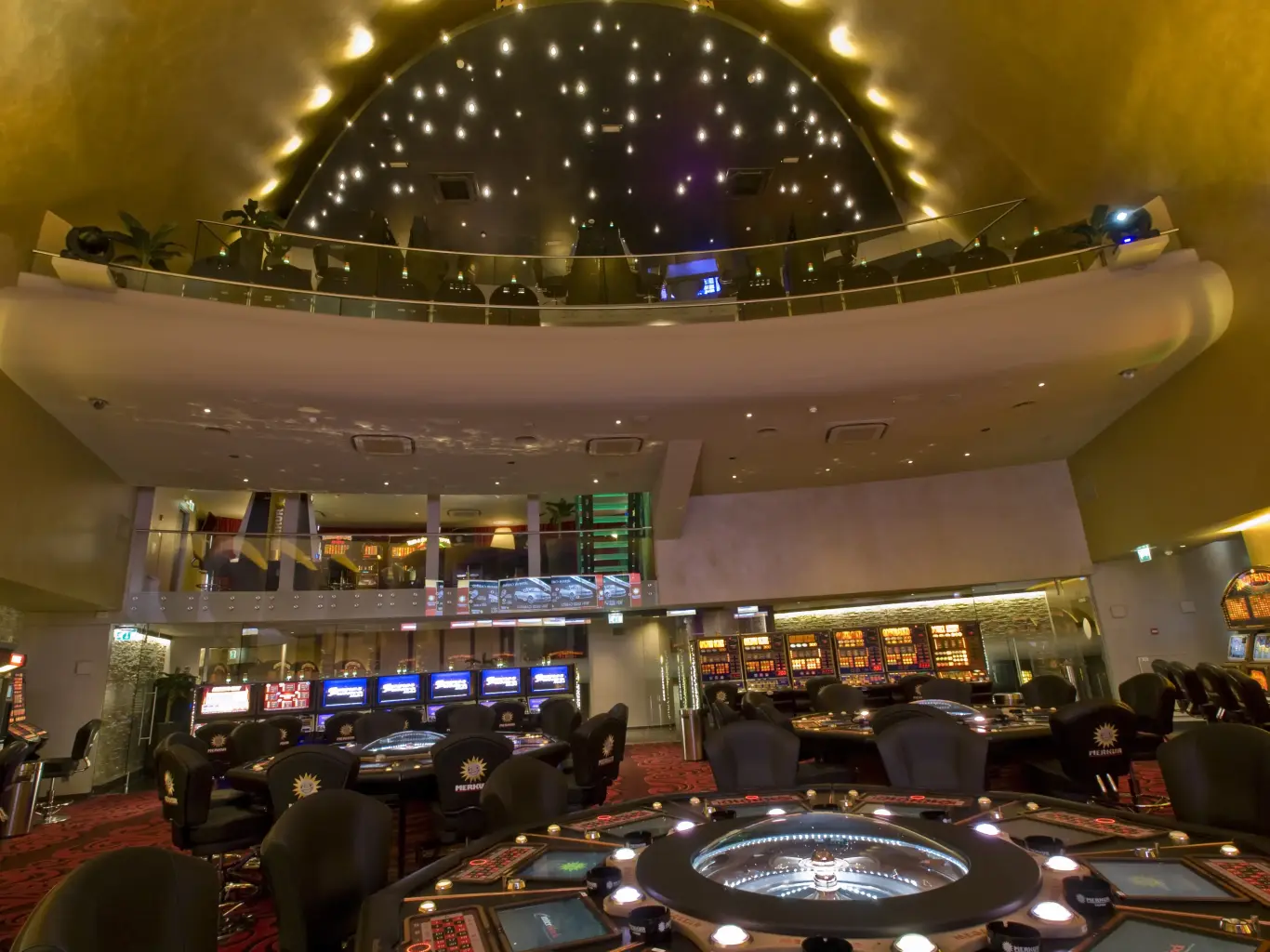
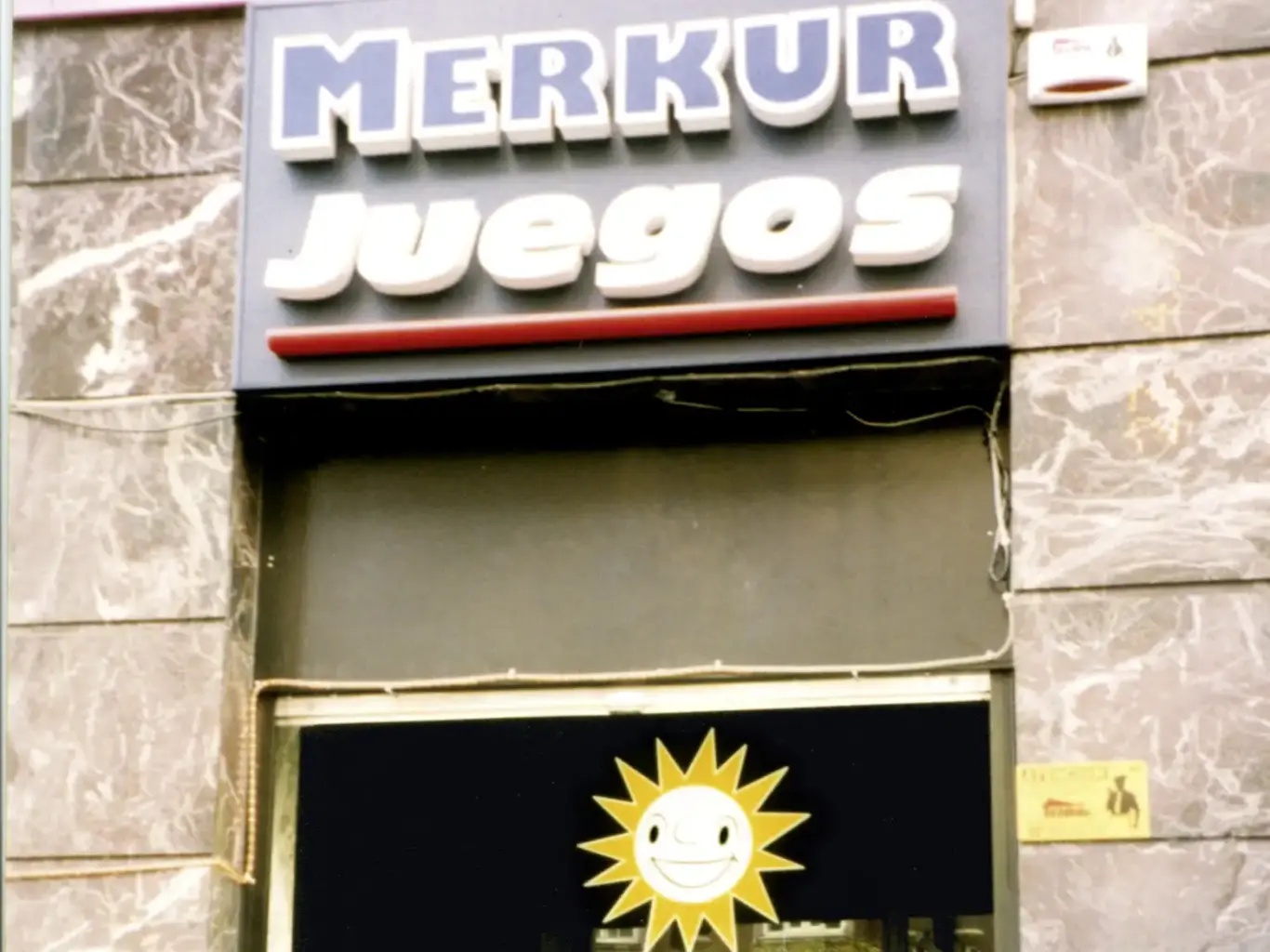
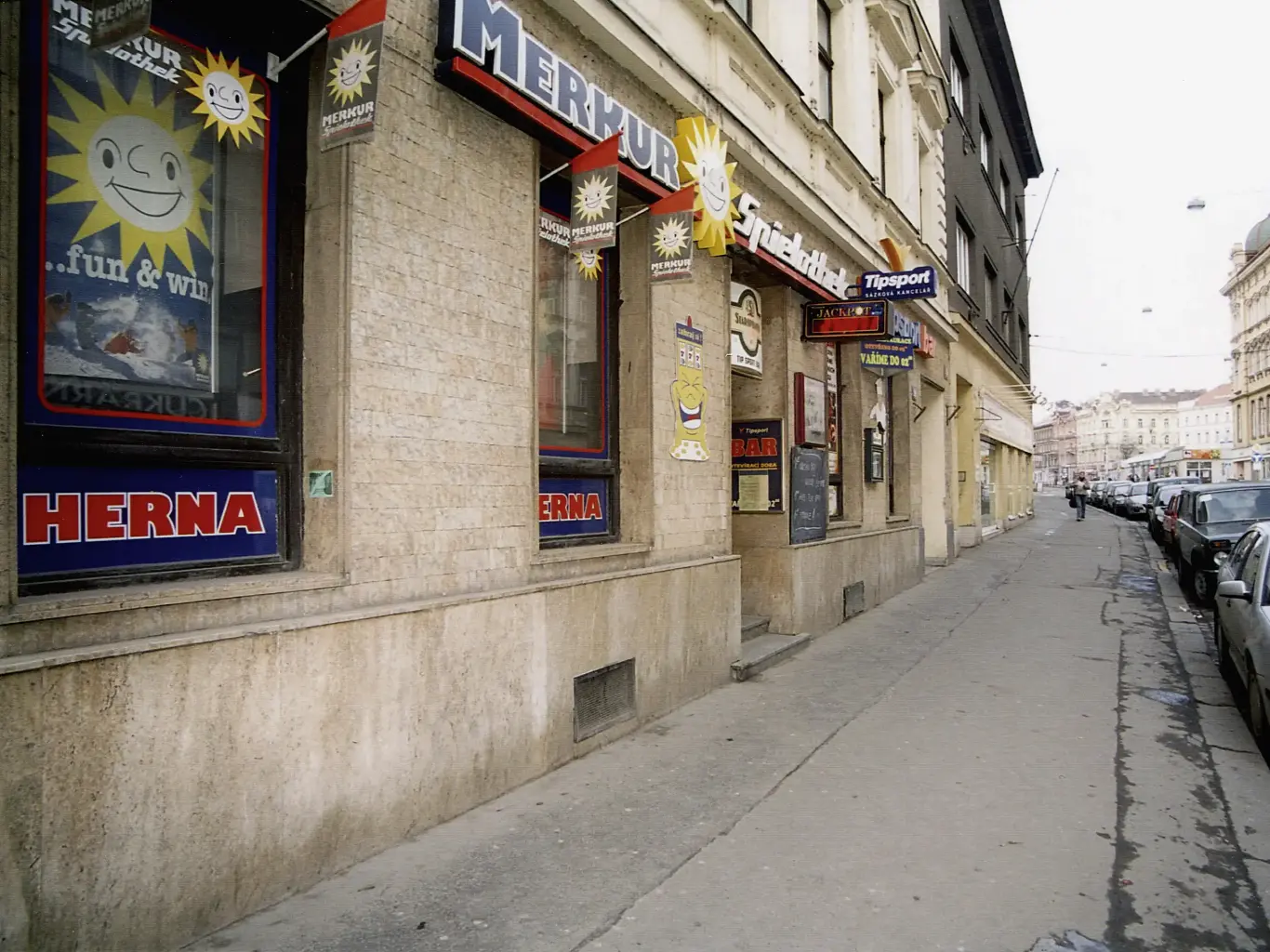
The international expansion mirrored the domestic success, relying on the 'golden triad' of professional staff, elegant interiors, and cutting-edge hardware. Early international venues maintained the same classic look as the German ones, featuring orange ceiling rings and sisal wall panels.
The friendly, smiling MERKUR Sun has been a constant symbol since day one. The core philosophy—combining great service, a welcoming atmosphere, and quality products—remains the secret to their European success, though offerings are tweaked to fit local tastes. MERKUR Sun has been part of it. Service – Atmosphere – Products: this remains the recipe for success across Europe to this day, with the range of offerings individually tailored to the needs of the respective local markets.
Did you know?
- In 1985, the amusement industry pushed for a ban on alcohol in commercial gaming venues—first voluntarily and then legally. However, MERKUR Arcades had already banned alcohol long before then, believing that guests enjoy their games more when they have a clear head.
- The scope of technical work evolved over time. While service technicians originally handled all machine faults and customer complaints, these responsibilities were gradually shared with branch staff through various training initiatives.
- The “Spielo-Cup,” a high-level handball competition for the Minden-Lübbecke district, was established.



/merkur-spielhalle-essen-frohnhauserstr-ambiente1_4_5_fix_teaser.webp)
/merkur-spielhalle-bremen-blumenthal-1_4_5_fix_teaser.webp)
_4_5_fix_teaser.webp)
 Franzi | Games