Historie_Spielhalle-70er Jahre

50 Years of MERKUR Casino: 1974–1983

Look back with us on 50 years enjoying the game.

approx. 4 min.
50 Years of MERKUR Casino: 1974–1983

The first decade

Spielhalle_PG_das erste Jahrzehnt

“When I first envisioned the Arcade, the market was dominated by basic, often lackluster halls that felt outdated and cheap, filled with old machinery. It was clear that such environments wouldn't attract new players. I realized we needed something completely different: a sophisticated, welcoming space. I imagined a large venue with plush carpets, modern suspended ceilings, elegant glass and mirror accents, soft ambient lighting, and a relaxed atmosphere where the noise was kept in check. This premium setting would house the most cutting-edge entertainment and gaming technology from around the globe. That was the spark that created the MERKUR Arcade!”

Paul Gauselmann

Arcades and ambience

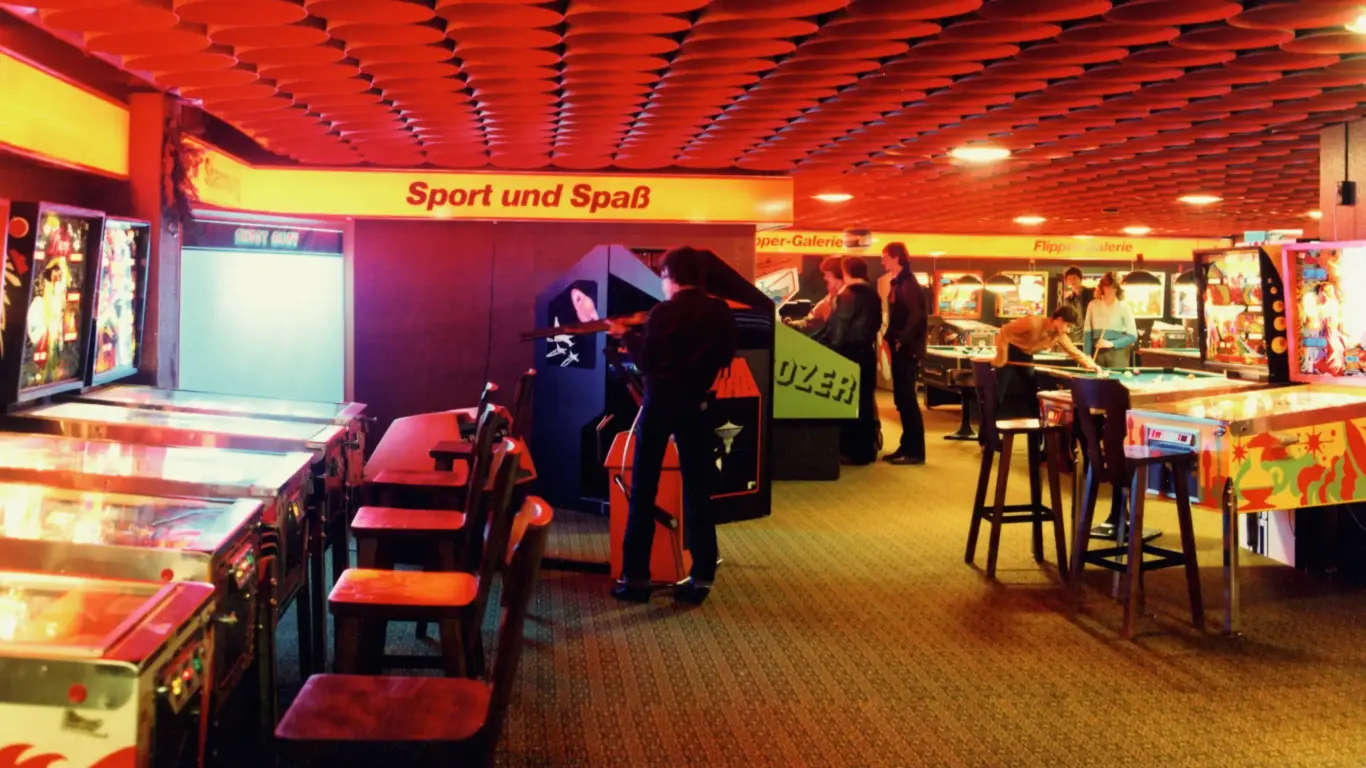
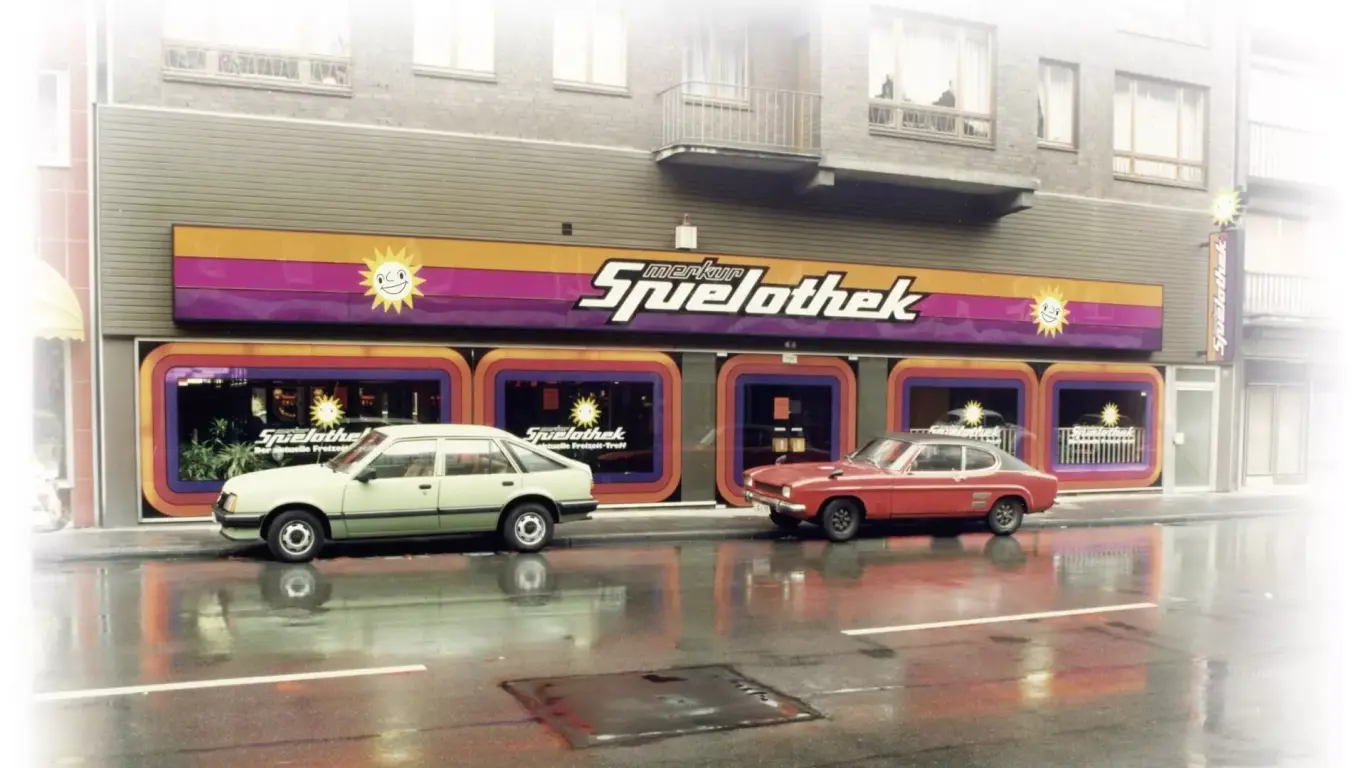
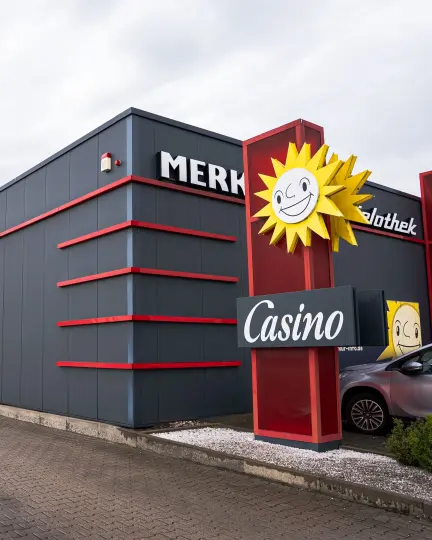
The journey began in 1974 with the opening of the very first MERKUR Arcade in Delmenhorst, specifically located at Langen Straße 4–6. This concept, pioneered by founder Paul Gauselmann, redefined the modern gaming venue and served as a pivotal turning point in his professional success.

The early aesthetic was quite distinct, featuring brown sisal wall coverings, light strips, and orange rings on the ceiling, while the outside of the building was marked by a signature three-color striped pattern. Later, in 1976, Paul Gauselmann’s longtime friend, Werner Gantefoehr, designed the MERKUR sun, which became the company's official symbol of good luck.
In 1976, the MERKUR sun was added, designed by Paul Gauselmann’s long-time friend Werner Gantefoehr as a lucky symbol for the company.

From the start, the company focused on a consistent visual identity for both the interior and exterior to ensure the brand was instantly recognizable to everyone.

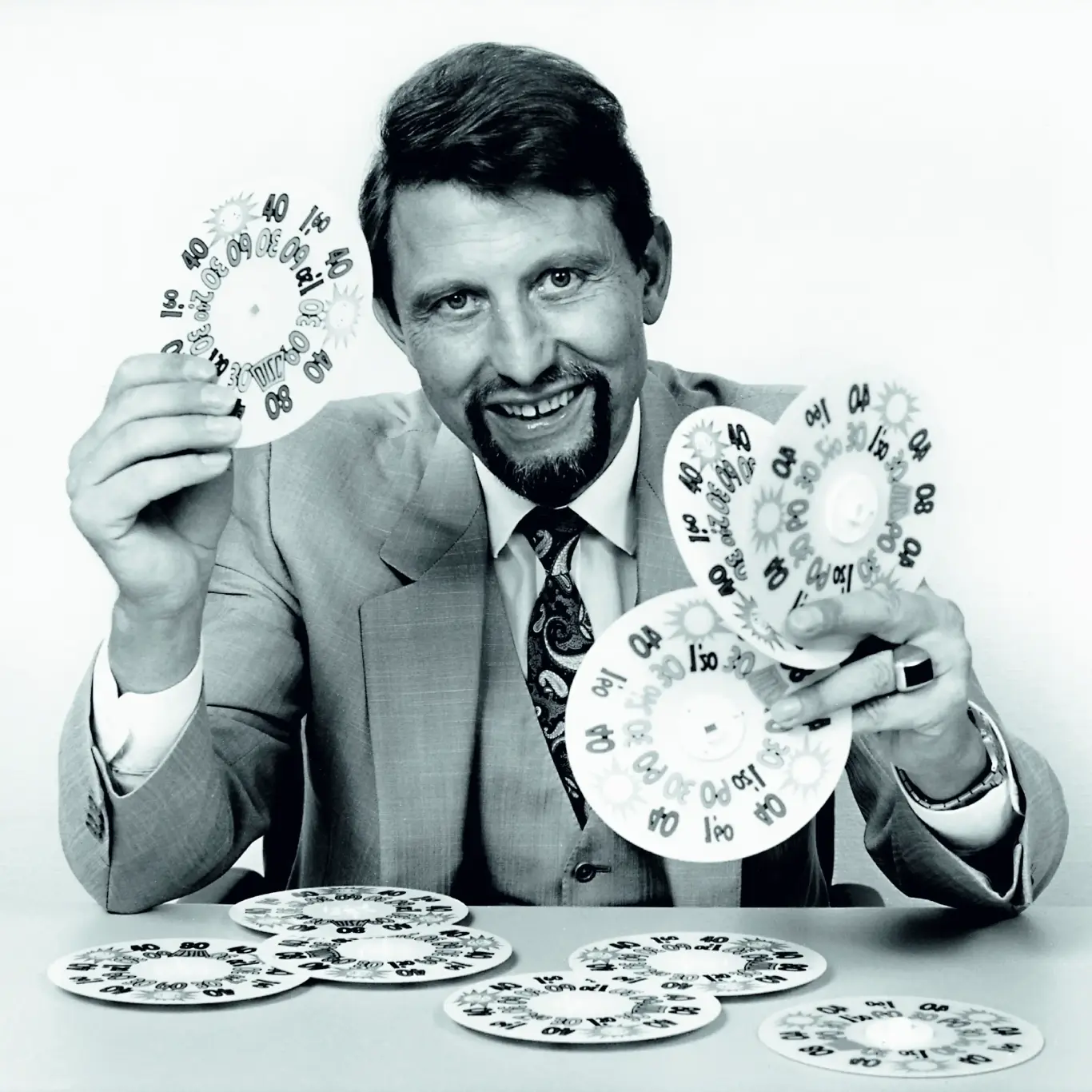
The venues often had a touch of glamour; many grand openings were attended by well-known personalities of the time. The guest lists included famous figures like TV host Jürgen von der Lippe, singer Ted Herold, actors Volker Lechtenbrink and Heinz Eckner, and presenter Carlo von Tiedemann.

The MERKUR Arcade

45 Spielhalle Anfangsjahre Minden Kopie

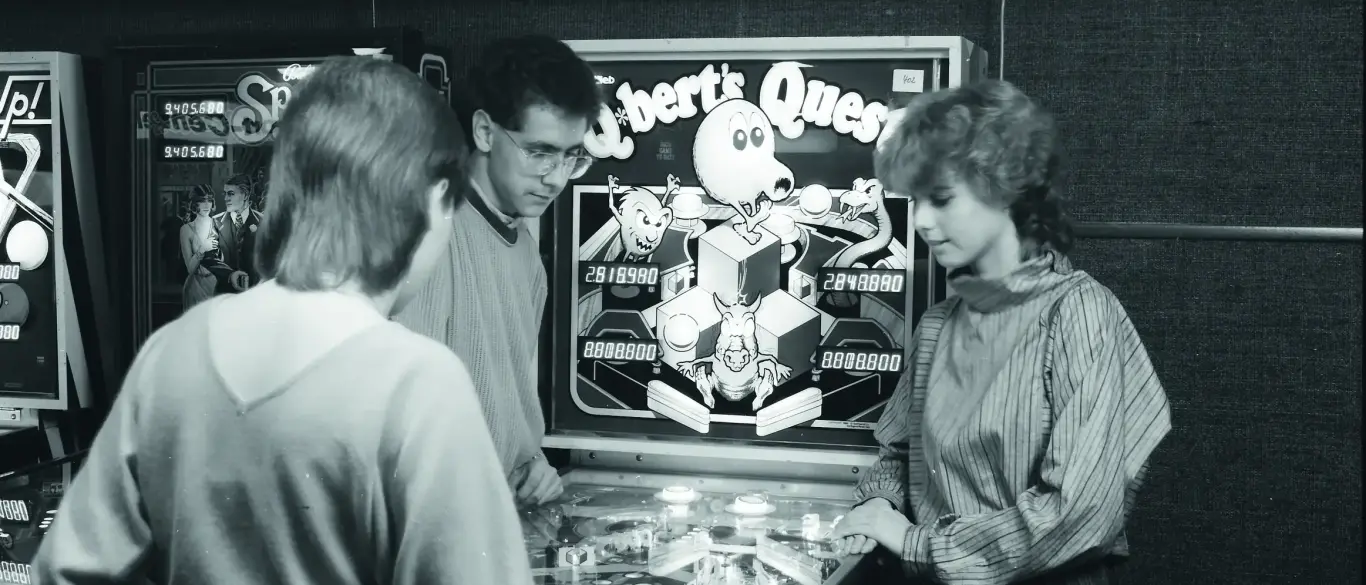
Guests were entertained by a variety of classics, including billiards, pinball, and table football.

Spielhalle_Kleidung_historisch

Employees and service

Initially, the staff were referred to as “supervisors,” a name inspired by the elevated central booth they used to monitor the floor. It wasn't until 1982 that the role of 'Arcade Manager' was officially created. Before then, regional managers handled the heavy lifting, with each person overseeing up to 15 different locations.
In 1982, the first Arcade managers were appointed. Until that point, regional managers had been responsible for operations in the Arcades, each overseeing up to 15 venues.

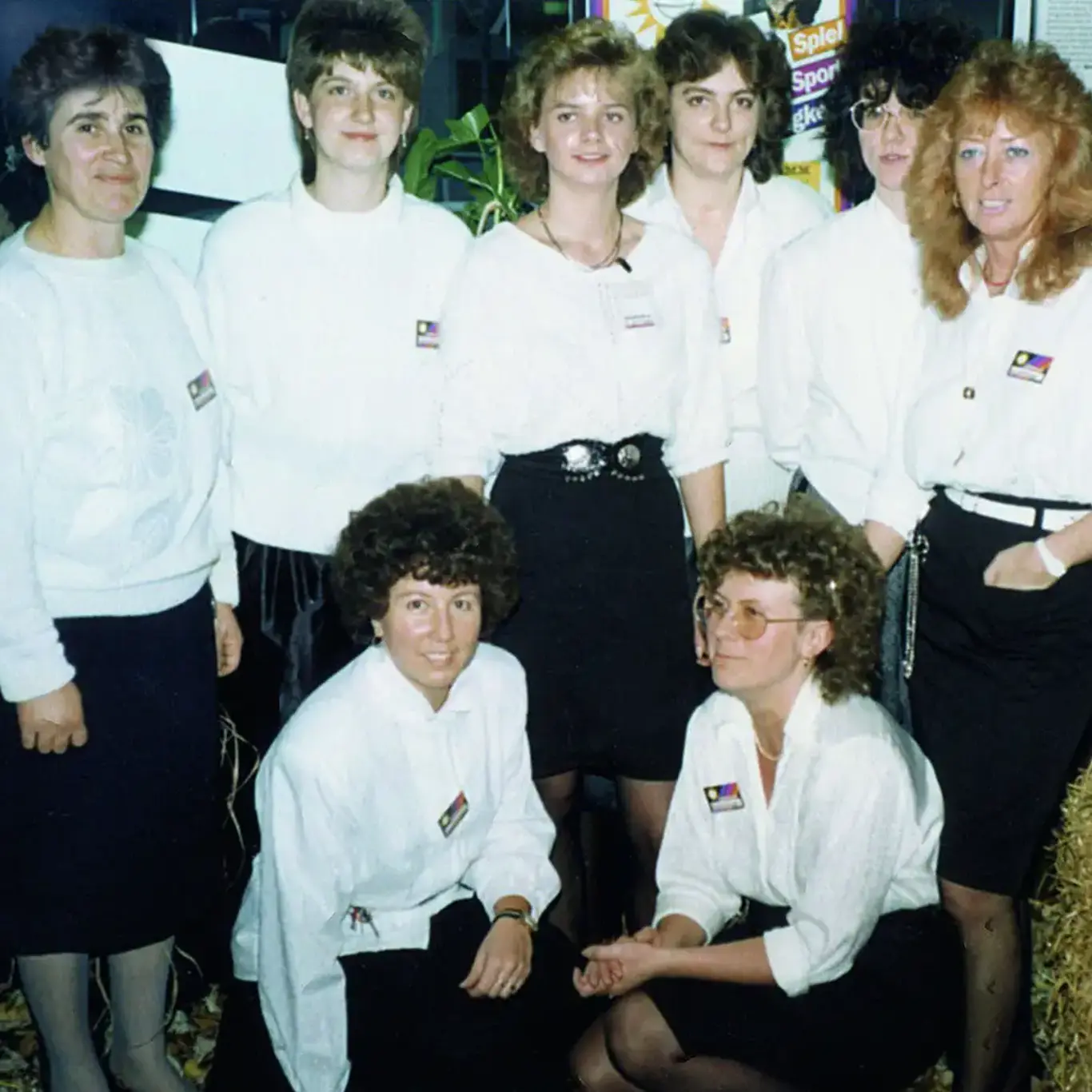
In the 1970s, the typical look consisted of a white shirt or blouse paired with black trousers and a bright orange waistcoat, though wearing this uniform wasn't strictly required yet.

Over the years, MERKUR Arcades constantly refined their hospitality. Even in the earliest days, guests were offered coffee, though it was served in simple plastic cups back then.

Gaming Machines 1974–1983

The company's commitment to innovation was unmatched; they invested heavily to ensure their customers always had access to the newest tech. In the early days, entertainment machines (UHG) were a massive hit. Since home video game consoles didn't exist yet, these machines were just as coveted as driving simulators and pinball.
Entertainment machines (UHG) were particularly popular with customers in the beginning. Video game consoles were not yet available for private use. This is why they enjoyed the same popularity in the arcades as pinball machines and driving simulators.

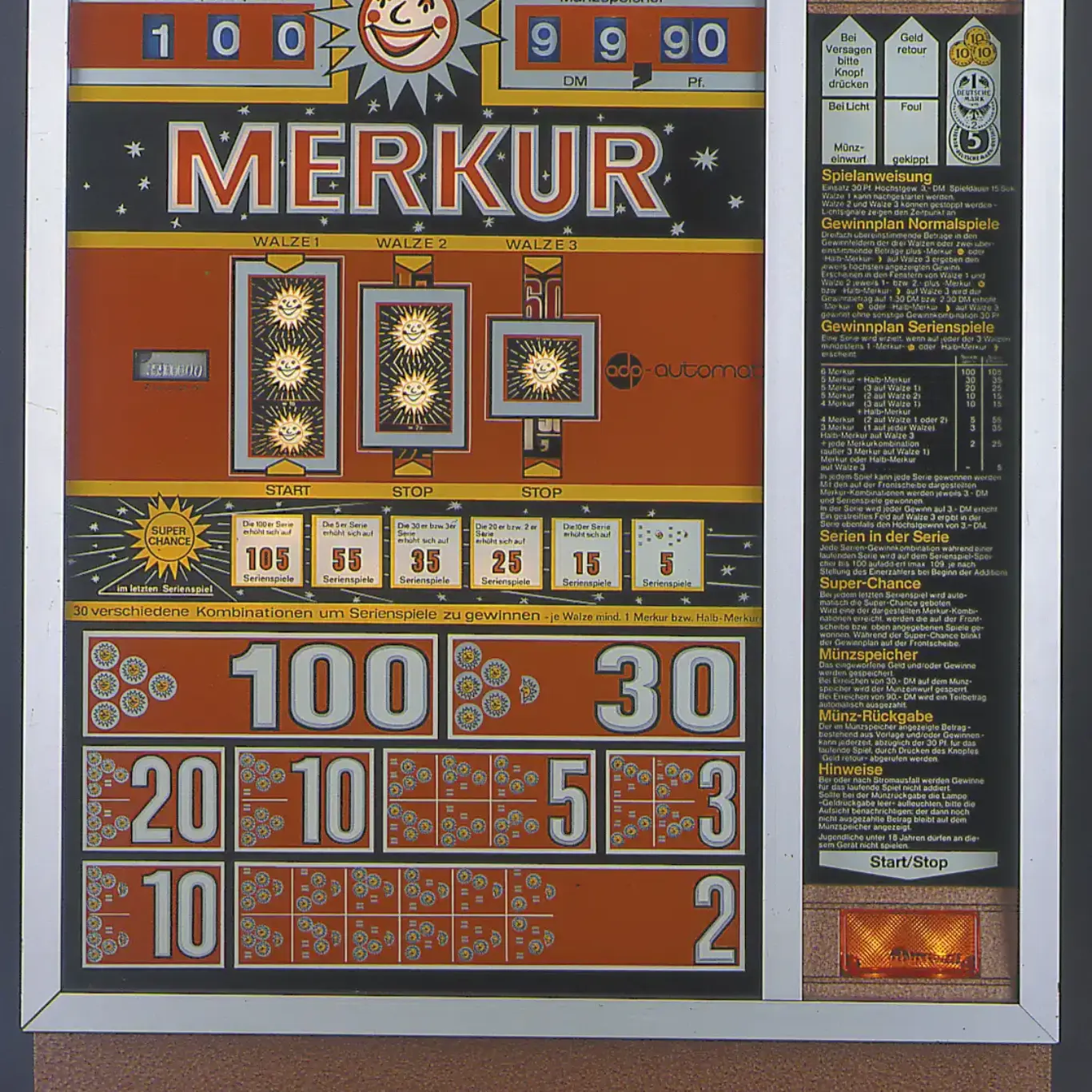
A major breakthrough occurred in December 1976 when the MERKUR B, the first money gaming machine designed by Paul Gauselmann, was approved by the Physikalisch-Technische Bundesanstalt (PTB). By 1977, it was rolled out across the country, instantly boosting player excitement and doubling revenue. This was followed by the MERKUR Capri in 1978. Back then, these were mechanical reel machines, meaning each unit offered only one game; to update the game, the entire machine had to be replaced. This led to the creation of the subsidiary Stella, which introduced the highly successful Venus machine, later evolving into the Venus Multi and Venus Multi Multi versions. MERKUR B , the first money gaming machine developed by Paul Gauselmann, received approval from the Physikalisch-Technische Bundesanstalt (PTB). In 1977, the machine was launched nationwide. It immediately brought much more gaming fun and doubled the cash takings. In 1978, the MERKUR Capri was introduced to the market. At that time, money gaming machines were reel machines and offered one single game per machine. Their replacement therefore always involved exchanging the entire machine. The subsidiary company Stella was founded, which launched the money gaming machine Venus onto the market. The machine was particularly successful and was later further developed as the Venus Multi and Venus Multi Multi.

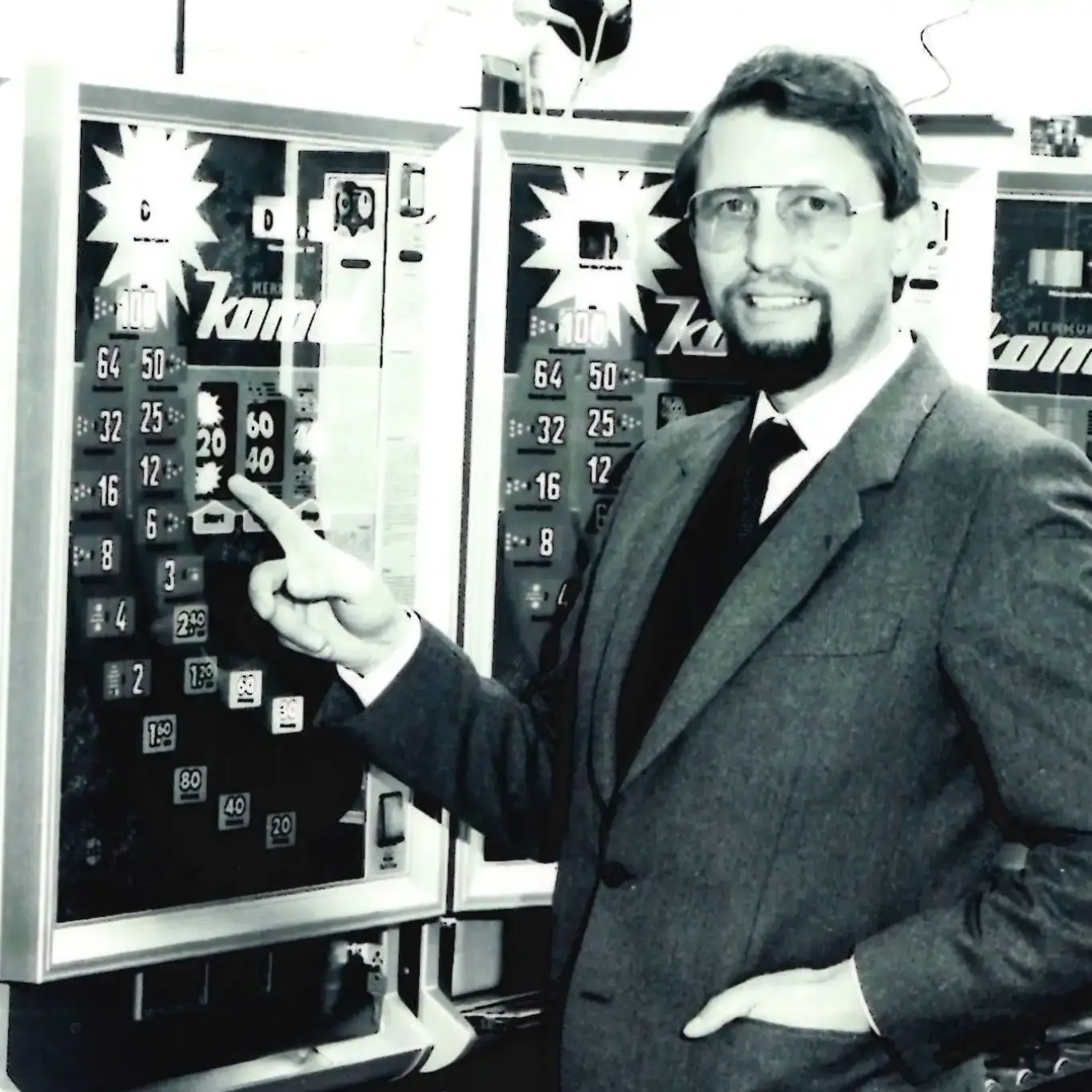
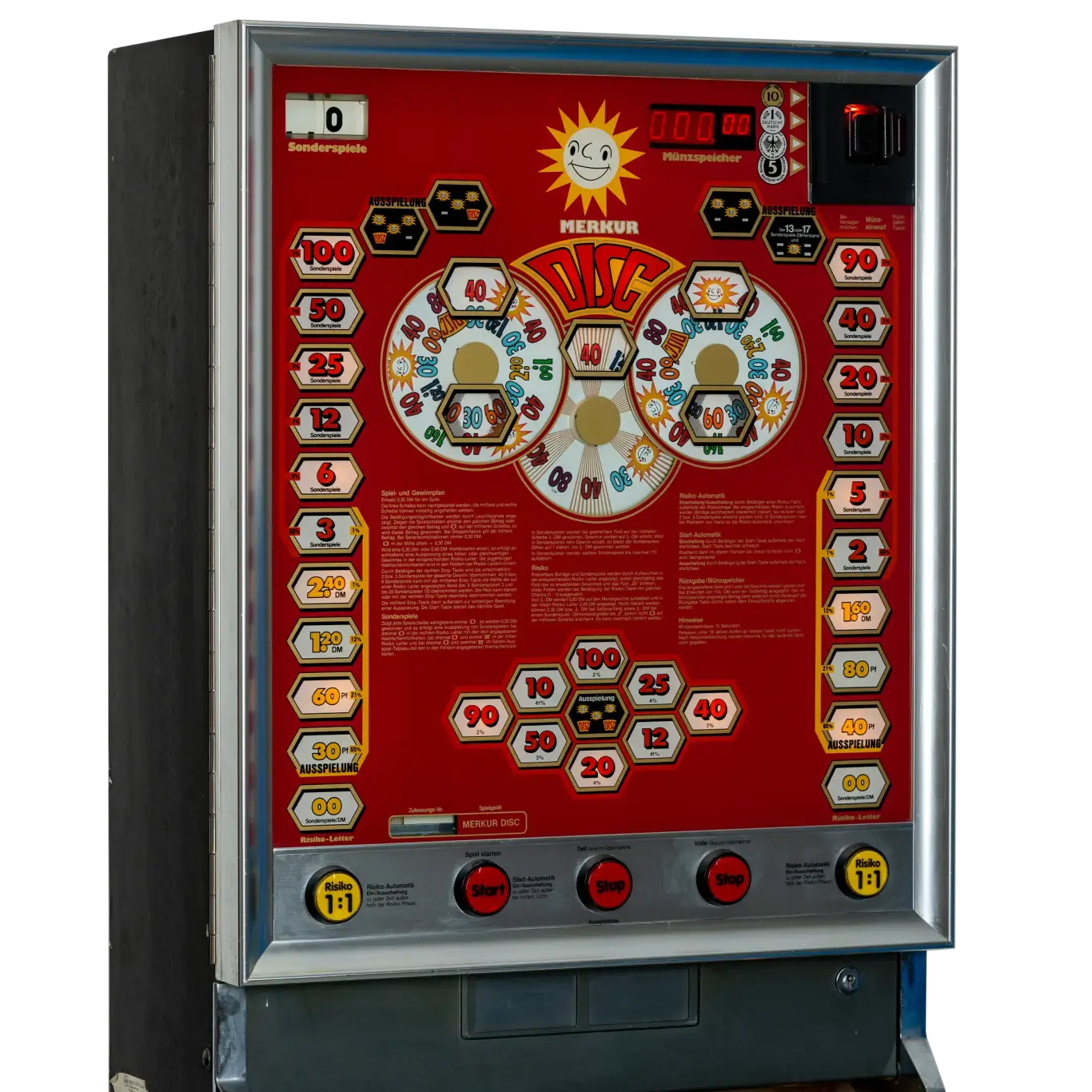
The company hit another home run with the Komet machine, which introduced the exciting 'risk ladder' feature. Then came 1983, the year of the MERKUR Disc, another landmark in the Gauselmann Group's evolution. Around this time, the initial video game craze began to cool, and players shifted their interest toward money gaming machines. However, a shift in technology occurred with the TV Ideal video machine—for the first time, operators only had to swap the internal circuit boards to update the game, leaving the outer cabinet untouched. Komet , which featured a risk ladder, the company achieved another major success. In 1983, the MERKUR Disc , a disc machine, marked another milestone in the development of money gaming machines from the Gauselmann Group. From 1983 onwards, the video boom stagnated, while the interest in money gaming machines increased. With the entertainment machine TV Ideal for video games, only the circuit boards had to be replaced for the first time – the housing could remain in the branch.

MERKUR_B_Automat_1117x1590px

1/3 MERKUR B (1977)

MERKUR_KOMET_Hochformat

2/3 MERKUR Komet (1981)

MERKUR_Disc_Freisteller

3/3 MERKUR Disc (1983)

Did you know?

  • The MERKUR B earned its name as a tribute to the Year of Mercury, the year it was launched.
  • During this era, the workforce at MERKUR Arcades consisted primarily of men.
  • Back then, it was all about coins; the early money gaming machines weren't equipped to handle banknotes. This technology didn't become standard until the early 2000s.
  • The venues were hubs of activity, typically staying open for 17 to 18 hours a day, often welcoming guests from 8 in the morning until 1 in the morning.
  • Pinball was a crowd favorite. To keep up with the high demand, the company used its own fleet of trucks to transport massive containers of these machines across Germany to various branches.
  • The stakes were strictly regulated: in 1976, the 30-pfennig game was established, and anything higher was legally prohibited.
  • The company embraced technology early on; between 1982 and 1983, MERKUR Arcades implemented their first IT system. By introducing the IBM 5280, the statistics team could finally process data electronically, finally moving past the era of manual calculators and punch cards.
Spielhalle_History

In those early years, entertainment machines actually outnumbered the money gaming machines in the Arcades.

Historie_Spielhalle-70er Jahre

That wasn’t enough?

Curious to discover more about how MERKUR Casinos evolved?

Then be sure to read the articles.

MERKUR Casinos History: 1984–1993 | MERKUR Casinos History: 1994–2003 | MERKUR Casinos History: 2004–2014 50 Years of MERKUR Casinos: 1984–1993
50 Years of MERKUR Casinos: 1994–2003
50 Years of MERKUR Casinos: 2004–2014

Double your luck? Just share it:

Be part of the history!

Logo-Merkur-Casino_Hoch_positiv-SW Kopie