Heads-Up Poker 101: Essential Rules and Tactics for the 1-on-1 Face-off
In Heads-Up Poker, there's nowhere to hide. It's just you and your opponent, two sets of cards, and zero distractions. Because you're involved in every single hand, the pace is relentless, forcing you to make quick decisions and realize exactly how critical position and mental toughness are.position, timing and nerve matter.
To keep the fast-paced action from becoming overwhelming, this guide provides a clear roadmap. We'll break down the mechanics step-by-step, clarify the essential rules, and share practical tips to boost your confidence—whether you're a complete newcomer to Heads-Up Hold’em or a seasoned player looking for an edge.step-by-step look at how it works, explain the most important heads-up rules and give you a few tips that help straight away – whether you are just getting into Heads-Up Hold’em Poker or simply want to play with more confidence.
5 Crucial Things to Know Before Your First Heads-Up Hand
- It's a pure duel. Every single move is a direct interaction between you and your one opponent.
- The blinds rotate every hand, with the player on the button also serving as the small blind. blinds move every hand, with the button sitting in the small blind.
- The standard flow remains: you move from the preflop through to the river, ending in a showdown unless someone folds.
- Since you never sit out a hand, the game feels significantly faster and more energetic than a full-ring table.
- Position is your greatest weapon here; the player who acts last holds the most information.
Bottom line: in a heads-up match, winning isn't about waiting for the perfect cards—it's about making the smarter decision.In short: in Heads-Up Poker, it’s not the perfect hand that counts – but the better decision.
What exactly defines Heads-Up Poker, and why is it so gripping?
Heads-Up Poker is the ultimate distillation of the game: you play exclusively against one person. There are no full tables and no boring waits. Every hand is a personal confrontation. The rounds fly by, the tempo picks up, and the psychological pressure mounts because every move triggers an immediate reaction.direct duel. The rounds come faster, the pace increases – and so does the pressure. Every action gets an immediate response.
The game often turns into a relentless war of blinds—attacking, defending, and counter-raising. Many pots are won through 'stealing' the blinds, which often leads to a 're-steal' from the opponent. This is why even the smallest bets can feel incredibly significant.
The Core Rules of Heads-Up Poker: What You Actually Need to Know
The most popular version is Heads-Up Hold’em, which uses standard Texas Hold’em rules but adapted for a two-player setup. While the spirit of the game is the same, a few specific tweaks change the dynamic:Heads-Up Hold’em Poker is the most common format, meaning it follows the rules of Texas Hold’em – just in a 1-on-1 setting. The overall feel remains the same, but a few details make all the difference:
Seating and Positions: There are only two spots—the small blind (SB) and the big blind (BB). In this format, the small blind also holds the button.Positions in the duel: There are only two seats – small blind (SB) and big blind (BB).
The small blind is also on the button.
The Order of Play: This is where most people get confused, so pay close attention:Who acts when? This is where the biggest difference – and the most common confusion – lies:
- During the preflop stage, the small blind is the first to act.
- Once the flop hits, the big blind takes the lead and acts first.
- Consequently, the button always has the advantage of acting last after the flop.
The blinds switch positions every hand: the small blind becomes the big blind and vice versa. This rotation ensures the game stays fair and neither player has a permanent positional edge.The blinds change every hand: Whoever was the small blind becomes the big blind. This rotation keeps the game balanced and ensures that no one has a permanent positional advantage.
Your Move: You can choose to fold, call, or raise. Starting from the flop, you also have the option to check (pass the action) or place a bet.Your options: You can fold, call or raise.
From the flop onwards, you can also check (not place a bet) or bet yourself.
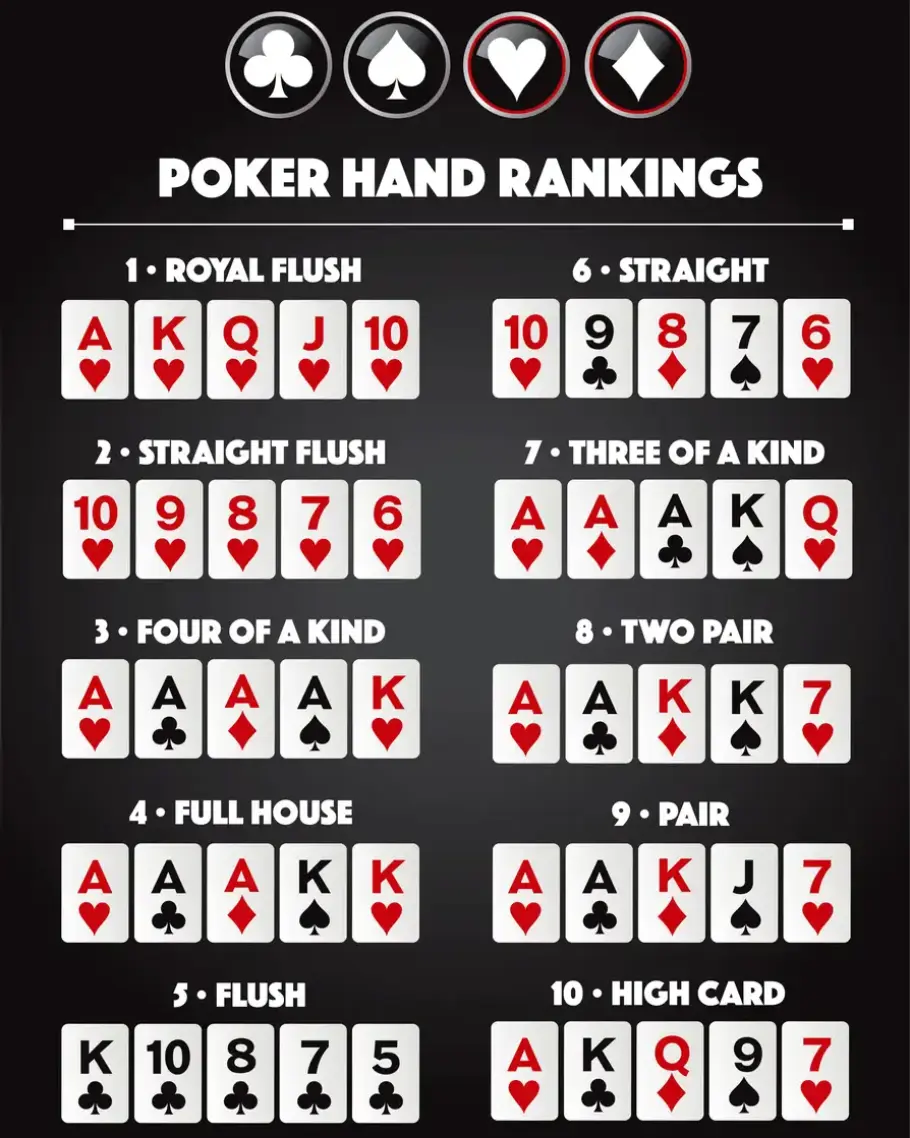
The Showdown: The winner is the one who can form the strongest five-card hand using their two hole cards and the five community cards on the table.Showdown: The best five-card combination from your two hole cards and the five community cards wins.
Pro Tip: Why position is absolutely vital in a duel
In a heads-up match, your position often dictates the outcome of a hand. Acting last after the flop allows you to see your opponent's move before deciding your own strategy.last postflop sees what the opponent does first – and can react accordingly.
For example, if you're on the button and your opponent checks after the flop, you hold the power. You can either bet to put them under pressure or check along to see the next card for free. If you were acting first, you'd be flying blind. In 1-on-1 play, this informational edge is magnified because there are no other players to muddy the waters.Example: You are on the button and act last after the flop. Your opponent checks. Now you can decide: place a bet and apply pressure, or check as well and see another card. If you had to act first, you would not have this information. This informational advantage is particularly powerful in 1-on-1 play, as there are no additional players to influence the action.
Heads-Up Hold’em Step-by-Step: From the Opening Blind to the Final Showdown
To help you jump straight into the action, here is a breakdown of how a typical hand unfolds. If you're playing at a casino, the dealer will manage the flow and let you know exactly when it's your turn.
1. Posting the Blinds: Before any cards are dealt, both players put in forced bets to create the initial pot:1 | Posting the blinds (mandatory bets): Before any cards are dealt, both players place compulsory chips into the pot:
- Small blind (smaller mandatory bet)
- The big blind is the larger of the two. In this format, the button serves as the small blind, and this role swaps every hand.Big blind (larger mandatory bet)
In heads-up, the button sits in the small blind – this is simply the position that alternates from hand to hand.
2. The Deal: Each player receives two private hole cards face-down. These are for your eyes only.2 | Hole cards (2 face-down cards): The dealer gives each player two cards. Only you can see yours – your opponent cannot.
3. Preflop Action: This is the first round of betting. The small blind (the button) starts the action. You can fold, call, or raise.3 | Preflop action (first decision): Now the first decision is made on how to proceed. The small blind (button) starts. You can:
- fold,
- call (match the big blind),
- raise.
The other player reacts – and if you both stay in, the hand continues.
4. The Flop: The dealer places three community cards face-up in the center. These are shared by both players. Now, the big blind acts first. You can check or bet, and your opponent must respond.4 | Flop + Action (3 Gemeinschaftskarten): Der Dealer legt drei offene Karten in die Mitte: den Flop. Diese Karten gelten für euch beide. Jetzt startet der Big Blind die Aktion. Du kannst wieder checken oder setzen – und dein Gegner antwortet.
5. The Turn: A fourth community card is revealed. Another round of betting follows, again starting with the big blind.5 | Turn + Action (4. Gemeinschaftskarte): Eine weitere offene Karte kommt dazu: der Turn. Wieder folgt eine Setzrunde (Big Blind zuerst).
6. The River: The fifth and final community card is dealt. This is the final betting round, often where the biggest swings happen and the pot is decided.6 | River + Action (5. Gemeinschaftskarte): Die letzte offene Karte: der River. Noch eine Setzrunde – oft die, in der’s um den ganzen Pot geht.
7. The Showdown: If neither player has folded, it's time to reveal the cards. The winner is whoever has the best five-card combination. Often, a single card makes the difference between a win and a loss. If you have the best hand, you take the pot, and the next hand begins immediately.7 | Showdown – now it gets serious: If you have gone through all the betting rounds, the cards are revealed. Now it comes down to who has combined their hand best with the board. Often, a single card decides victory or defeat. If your combination wins, the chips move to you – and the next round is already waiting.
👉 Looking for more wins? If you love the thrill of the showdown, keep the excitement going with our MERKUR SLOTS. Try our fan-favorite classic Fruitinator in its various versions, or explore the legendary Book of Ra in our dedicated “Book Games” section.👉 Speaking of winning: if the feeling after the showdown stays with you, the next opportunity is already waiting in our MERKUR SLOTS . Why not try Fruitinator , our popular reels classic available in many variants, or Book of Ra , which you can find in our special feature “Book Games” .





 Franzi | Games